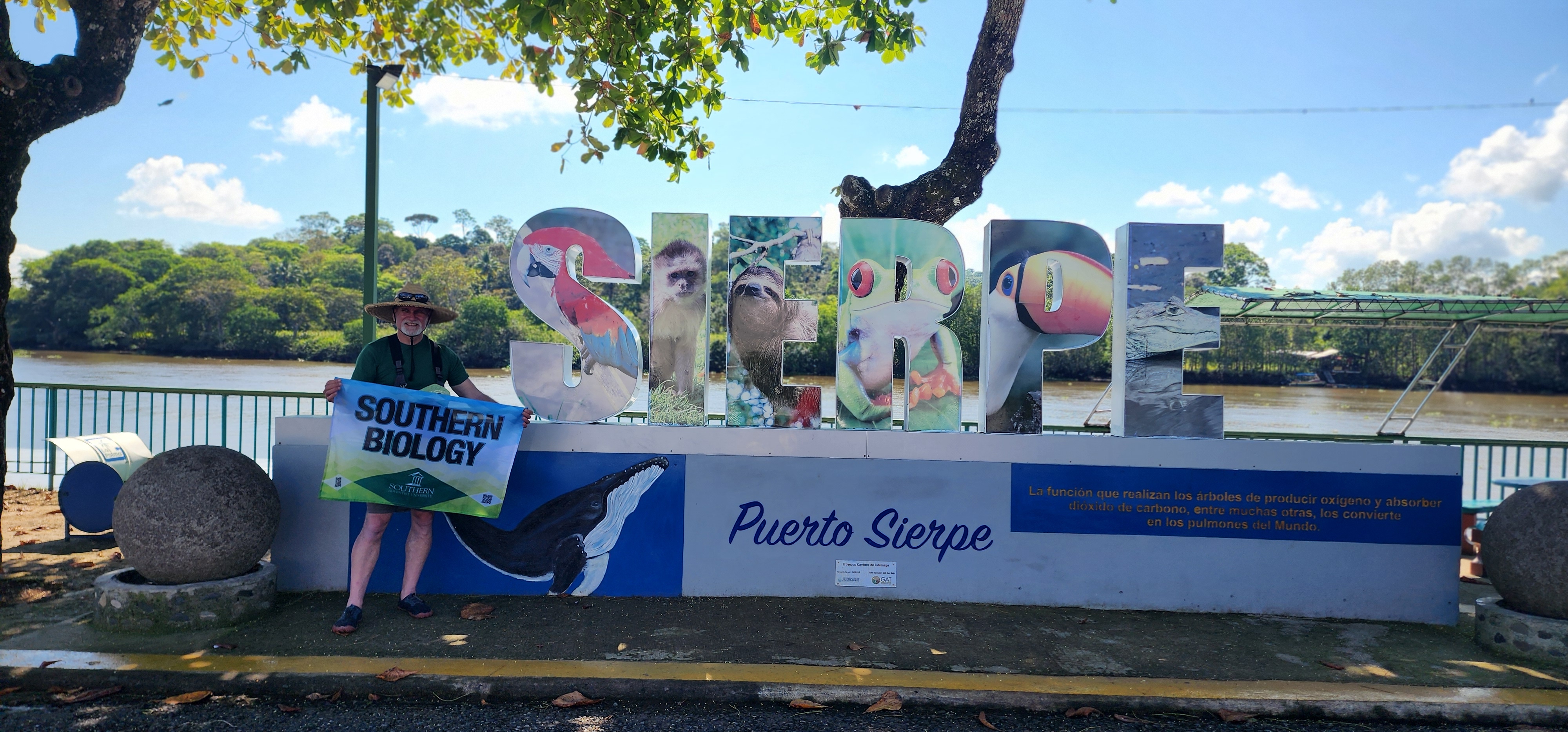
Sierpe and The Térraba-Sierpe National Wetland
Sierpe is a scenic river town in southern Costa Rica that serves as the primary gateway to Drake Bay and the Osa Peninsula. It is famous for bordering the Térraba-Sierpe National Wetland, the largest mangrove reserve in Central America.
The Térraba-Sierpe National Wetland (Humedal Nacional Térraba-Sierpe) is the largest and most important mangrove ecosystem in Central America, covering over 30,000 hectares (about 116 square miles) at the mouths of the Térraba and Sierpe rivers. This rich and complex environment is a protected area, nationally designated in 1994 and a Ramsar Site of international importance since 1995 for its role in conservation.
The mixing of saltwater from the Pacific Ocean with freshwater from the rivers creates a unique estuarine environment that supports a vast array of life and serves as a nursery for many marine species. The dense mangrove forests act as a vital buffer against coastal erosion, help maintain water quality by filtering pollutants, and are significant for carbon sequestration.
The wetlands are home to an incredible diversity of animals and plants:
Over 300 bird species have been recorded, making it a premier birdwatching destination. Notable residents and migratory species include the scarlet macaw, herons, egrets, the endangered Yellow-billed Cotinga, and the endemic Mangrove Hummingbird.
Visitors may spot howler, white-faced, and spider monkeys, sloths, coatis, raccoons, and river otters.
The intricate channels and lagoons are inhabited by spectacled caimans, American crocodiles, tree boas, and numerous species of fish and commercial shellfish, which have been harvested by local indigenous communities for centuries.
The area features several types of mangroves, as well as yolillo palm swamp forests, sandy beaches, and cliffs.
Updated Jan 25, 2026 by Ben Thornton