Connect with fellow alumni at Lake Junaluska for a delicious meal on Friday during camp meeting. Please RSVP at southern.edu/alumnievents.
QuickNotes | May 2026
Southern Explores Nuclear Fusion
The U.S. Department of Energy awarded Southern’s School of Engineering and Physics
a Reaching a New Energy Sciences Workforce (RENEW) grant of $156,000 in early 2025
to further nuclear fusion research through curriculum development, bootcamps, and
student internships.
Nuclear fusion is a cousin to nuclear fission, which is used as an energy source across
the world. “Instead of fission—taking something heavy, such as uranium, and splitting
it apart—we take something light, often hydrogen, and fuse it together to release
energy,” explains Sean Walters, PhD, associate professor. “The technology has the
potential to become a very efficient and controlled fission alternative.”
Under the guidance of Tennessee’s Oak Ridge National Laboratory, the government’s
largest multi-disciplinary research and development center, Southern partnered with
several other universities, including Missouri University of Science and Technology,
Tennessee State University, Tennessee Tech University, University of Tennessee at
Knoxville, and Tuskegee University in Alabama. Two Southern professors, principal
investigator Walters and Vola Andrianarijaona, PhD, spearheaded the initiative.
As the team began developing the program, investigators found the need for an outline
of objectives in this field. This need led to the creation of a curriculum providing
instructors with a comprehensive list of concepts relevant to the study of nuclear
fusion.
Professors at each of the universities are creating curricula to be implemented free
of charge in classrooms across the country. “At Southern, we’re planning to create
short, two-week modules on specific fusion energy topics that can be inserted into
any class,” Walters says. “That way, universities can introduce students to these
new concepts without asking them to take extracurricular classes on top of their required
course loads.”
Classes on nuclear fusion typically begin in graduate school, since the topic is highly
specific for an undergraduate degree; however, larger universities have begun implementing
specialty tracks in fusion engineering. Southern’s plans to introduce students to
nuclear fusion keep the university on the cutting edge of education trends in undergraduate
engineering programs.
Beyond curriculum development, the RENEW grant funds will also go toward guaranteed
internships for Southern students, first at Oak Ridge National Laboratory and then
at private companies focused on fusion energy. Angelina Castillo, senior physics and
math double major, earned the first spot at the Oak Ridge lab in Summer 2025.
“Nuclear fusion has a lot of untapped potential, and I was very grateful and excited
for the chance to intern in the field,” Castillo says. “I worked to find a process
to recycle the fuel used in nuclear fusion, exploring ways to separate the different
particles in the fuel into the parts that can be reused and the parts that can’t.”
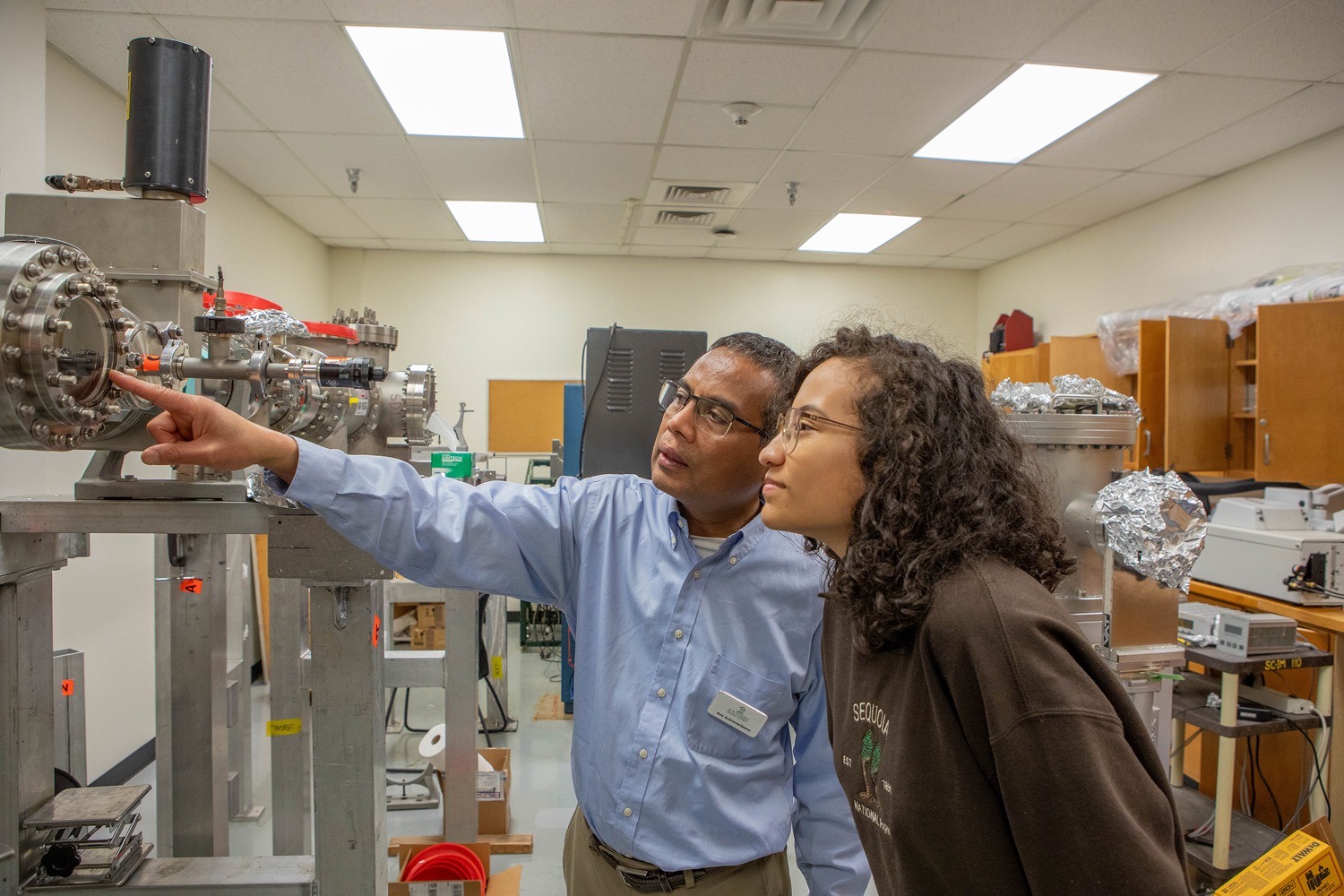
Castillo has already furthered nuclear fusion through her work at Southern with Andrianarijaona,
who has a long-standing partnership with the national lab in Oak Ridge stretching
back to 2009. For the past five years, Andrianarijaona has coordinated the participation
of Southern students on the laboratory’s beamline for ion-neutral collisions.
“Nuclear fusion is unstable in part because when particles fly out after the reaction,
they have enough kinetic energy to melt the walls containing it,” Castillo explains.
“Lining the walls with molecular hydrogen could absorb some of the particles’ energy,
and the beamline we’re building will help us measure how much energy hydrogen can
hold, helping to determine the viability of hydrogen-lined fusion chambers.”
- Chehalis Eno, ’26, adapted for QuickNotes
90 Students Preach in Dominican Republic
Before He ascended to Heaven, Jesus issued the Great Commission: “Go into all the
world and proclaim the gospel to the whole creation,” (Mark 16:15, ESV). The Evangelistic
Resource Center (ERC) at Southern follows this command by equipping laypeople to evangelize.
That includes students who sign up and travel to Argentina, Costa Rica, Zimbabwe,
and other international locations. Volunteers are each assigned to a local church
where they preach daily sermons during a weeklong visit.
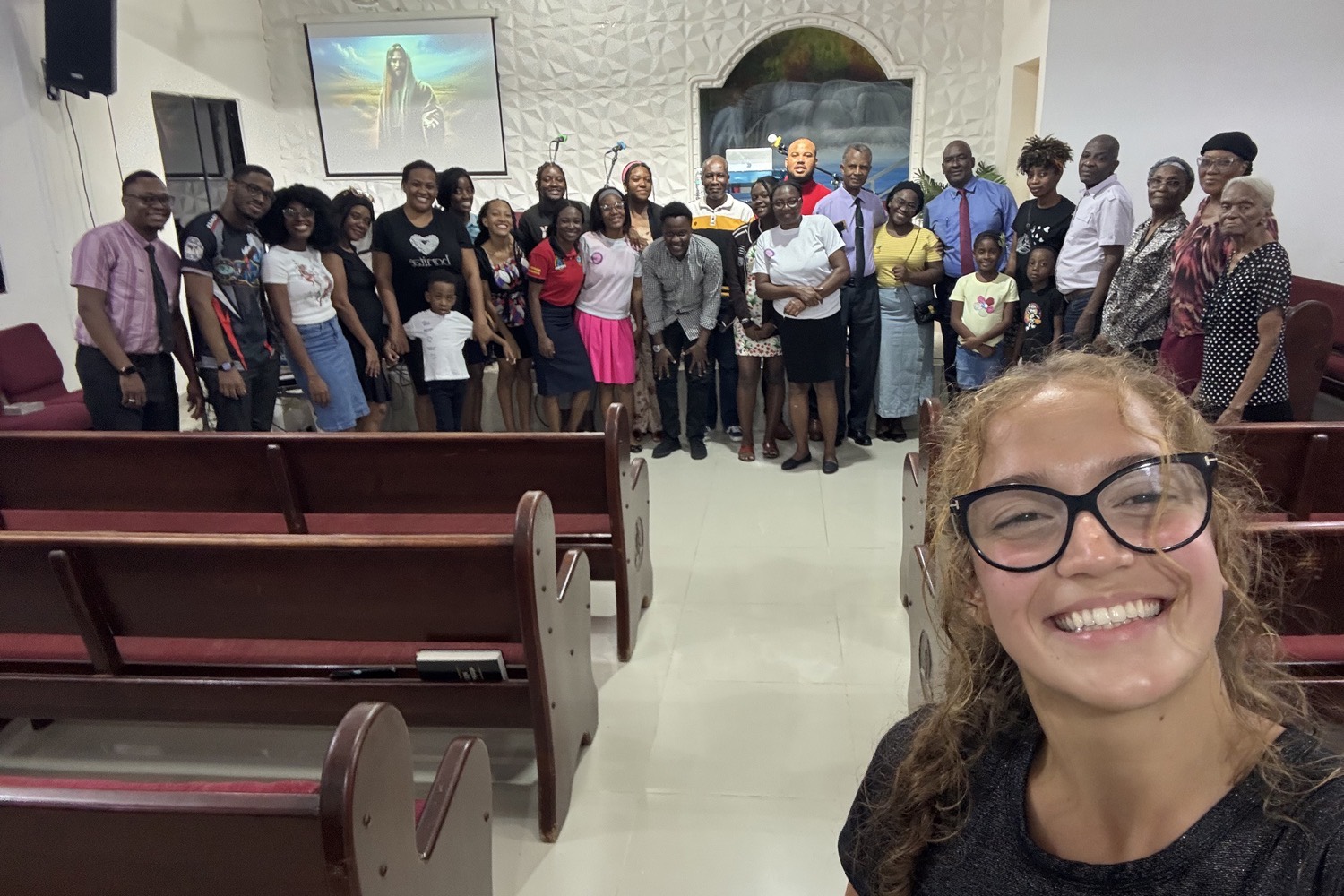
In November 2025, the ERC collaborated with the university’s Soul-winning And Leadership
Training (SALT) program, which operates in partnership with It Is Written, to send
nearly 90 students to speak at an equal number of churches in the Southeast Dominican
Conference of Seventh-day Adventists. It was the largest student evangelism group
ever sent out from campus during Thanksgiving break, and the efforts of students and
local laypeople resulted in more than 500 baptisms.
For Carola Rizzo, junior health science major, the mission to the Dominican Republic
was her second ERC trip, following one to Belize in spring 2025.
“I chose to go again because the first time was such a spiritual experience, and I
wanted to keep the momentum going,” she says.
Organization for a trip begins long before students land at their destination. Raul
Rivero, ERC director and associate director of Southern’s Pierson Institute of Evangelism
and World Missions, explains: “We work with the host conference to certify men and
women in local churches to give Bible studies to people in the area. That lays the
groundwork so that community members are ready to hear our students preach.”
Students also receive training prior to traveling. During a weekend intensive, they
become familiar with topic outlines, practice preaching, and gain tips on maintaining
eye contact, using voice inflection, and working with a translator. Each is mentored
on how to add personal stories to make the presentation materials more engaging.
The prospect of preaching can be intimidating for many, but the ERC’s sermon templates
help students move past that barrier. Rizzo, who admits to struggling with public
speaking, says her abilities have improved with each sermon.
“I truly believe the Holy Spirit is the One doing the talking when I preach,” she
says. “I actually find a calm once I get up front.”
Topics for the speakers include the Sabbath, death and resurrection, baptism, and
the Second Coming. At one church, Rizzo recalls that even believers were very receptive
to hearing core Adventist beliefs again. However, her experience was not without challenges.
During the culminating sermon about baptism, the electricity went out at her church.
“I knew the enemy was trying to get me,” she says, but her perseverance was rewarded
when several members responded to her call for baptism.
On different parts of the island, dozens more SALT volunteers were preaching at other
churches. Evie Rodriguez, sophomore nursing major, shares her experience of stepping
outside of her comfort zone. Ever passionate about Bible work, she found the idea
of preaching quite daunting.
“I felt like I had no qualifications,” Rodriguez says, “but I decided I wanted to
go on the trip anyway—even if just for the experience of relying fully on God.”
Her first time preaching at Refugio de Cristo, a church on the island’s south side,
was a Sabbath morning.
“The sermon did not go exactly as I wanted,” Rodriguez admits. “I stutter when I get
nervous, and I was speaking in Spanish, which isn’t my first language. After I got
back to the hotel, several other SALT students prayed with me. That’s when I realized
that this isn’t about me. It’s about God! It’s totally up to Him, and He never fails!
I returned to preach that afternoon with a completely different attitude.”
Rodriguez maintains connections with several church members she met and hopes to return
to the Dominican Republic.
“Anyone who feels called to go on a mission trip should do it!” Rodriguez attests.
“Even if you don’t think you’re the right person for the job, God will still do the
impossible through you.”
- Chehalis Eno, ’26, and Isabella Dixon, senior English major
“Psych Pod” Dedicated in Memory of Professor
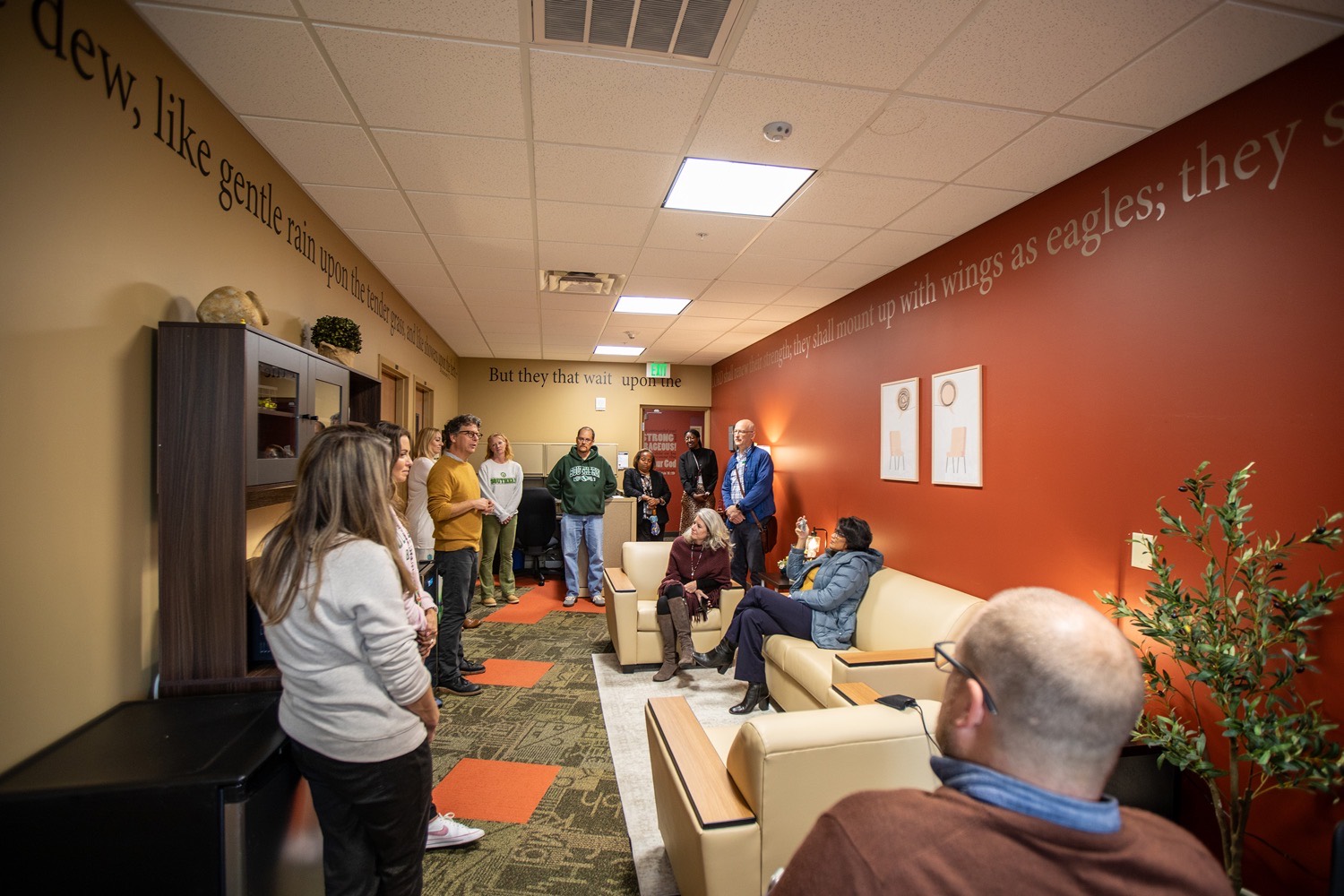
The psychology program within the School of Education, Psychology, and Counseling
recently renovated its space to include a new student hub, a central area near professors’
offices where students can gather to collaborate on homework or catch up with friends.
The project was made possible through Giving Day donations, and the space is dedicated
in memory of Professor Ruth Williams.
Prior to being updated, the newly named Psych Pod functioned almost exclusively as
a workroom for teaching assistants. Now, the space features couches, desks, a snack
bar, and a screen with laptop connections.
“The new space feels so much homier,” reflects Melissa Mendes, senior psychology major.
“Because we can be here just studying or grabbing a snack, it’s much easier to connect
with professors as well as our classmates.”
The updated Psych Pod is dedicated in memory of Ruth Williams, affectionately known
as “Mama Ruth,” who served more than three decades as a professor. She was the longest-acting
director of the program (between 1991-1995 and 2000-2022) prior to her retirement
in 2022 and passing the following year.
Cristy Pratt, ’04, associate professor, was taught by Williams during her undergraduate
psychology studies at Southern and later recruited by the beloved advisor to join
the teaching faculty. She notes that professors Tron Wilder, ’01, PhD, director of
the psychology program, and Matt Tolbert, ’01 and ’05, PhD, were also students of
Williams who benefited from her mentorship.
“She had a way with students and an ability to simultaneously connect with us and
challenge us,” Pratt shares. “What a mentor! Students would line up outside her office
to talk to her.
Because she encouraged a sense of belonging throughout the department, we strive to
continue the vision she instilled in us by fostering the same type of environment
she created.”
Open to current students since August of this past school year, the Psych Pod was
officially dedicated on October 28. Williams’ daughter and several other family members
attended remotely alongside past faculty members who worked with Williams.
The project was funded entirely through donations given during the 2024 and 2025 Giving
Days, The annual fundraising event at Southern provides opportunities for alumni,
community members, employees, students, and other friends of the university to lend
financial support for designated projects in specific academic and student support
areas across campus, allowing gifts to be earmarked for improvements in a department
near and dear to donors’ hearts. To learn more, visit southern.edu/givingday.
Backpacking Students Aid Injured Hiker
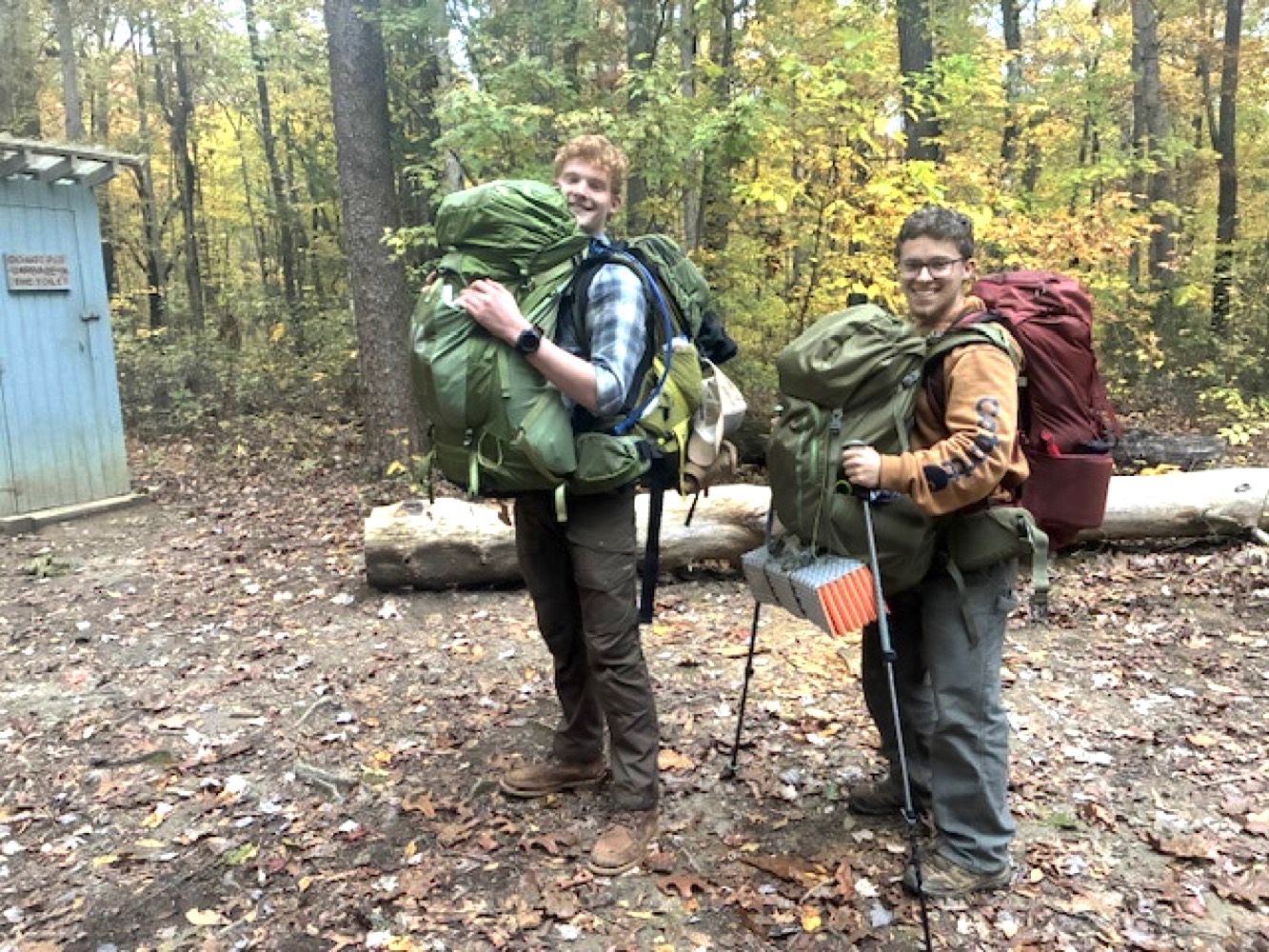
A backpacking class excursion turned into a Good Samaritan opportunity last fall for
students who were exploring a state park in Middle Tennessee.
Led by Assistant Professor Leslie Evenson, ’04, from the School of Health and Kinesiology,
the group spent three days hiking and camping in scenic Savage Gulf State Park in
Beersheba Springs while applying skills learned in the classroom. On a rocky path
just under a mile from the trailhead, Southern’s group encountered an injured hiker
with a lower leg injury that prevented him from walking any further. Four students
stayed with the immobilized man while the rest continued to their campsite.
While sunset was quickly approaching, Jonathan Moats, senior nursing major; Tanner
Moran, junior nursing major; Grayson Noble, senior electrical engineering major; and
Eric Wolf, senior mechanical engineering major, assisted a park ranger in transporting
the hiker back up the steep trail with an 800-foot elevation gain.
“It wasn’t doable alone,” Moats recalls. “The ranger only had a crutch and a splint,
so we volunteered to help.”
The foursome supported the injured man on the flatter parts of the trail, trading
off between helping bear his weight on their shoulders and lugging heavy hiking backpacks.
The final stretch involved carrying him up 150 feet of rough rock and wood stairs.
Less than an hour after departure, the students arrived back at the trailhead with
the hiker and ranger.
“The students were very helpful with carrying out the injured hiker, and we thoroughly
appreciated their efforts,” says Todd Childress, park ranger.
Noble and Moats give all the glory to God, praising divine providence.
“God gave us the energy to get back up the trail with the victim plus the extra weight
of the backpacks,” Noble says.
“It’s really cool how God put us there just at the right time,” Moats adds. “If we
were a bit earlier, we never would have seen the hiker, and the ranger would have
had to help him alone. If we’d been any later, we would have been struggling after
dark. Even in the worst of situations, God still works things out just perfectly.”
-Isabella Dixon, senior English major
Enrollment Jumps for Teaching Master of Arts
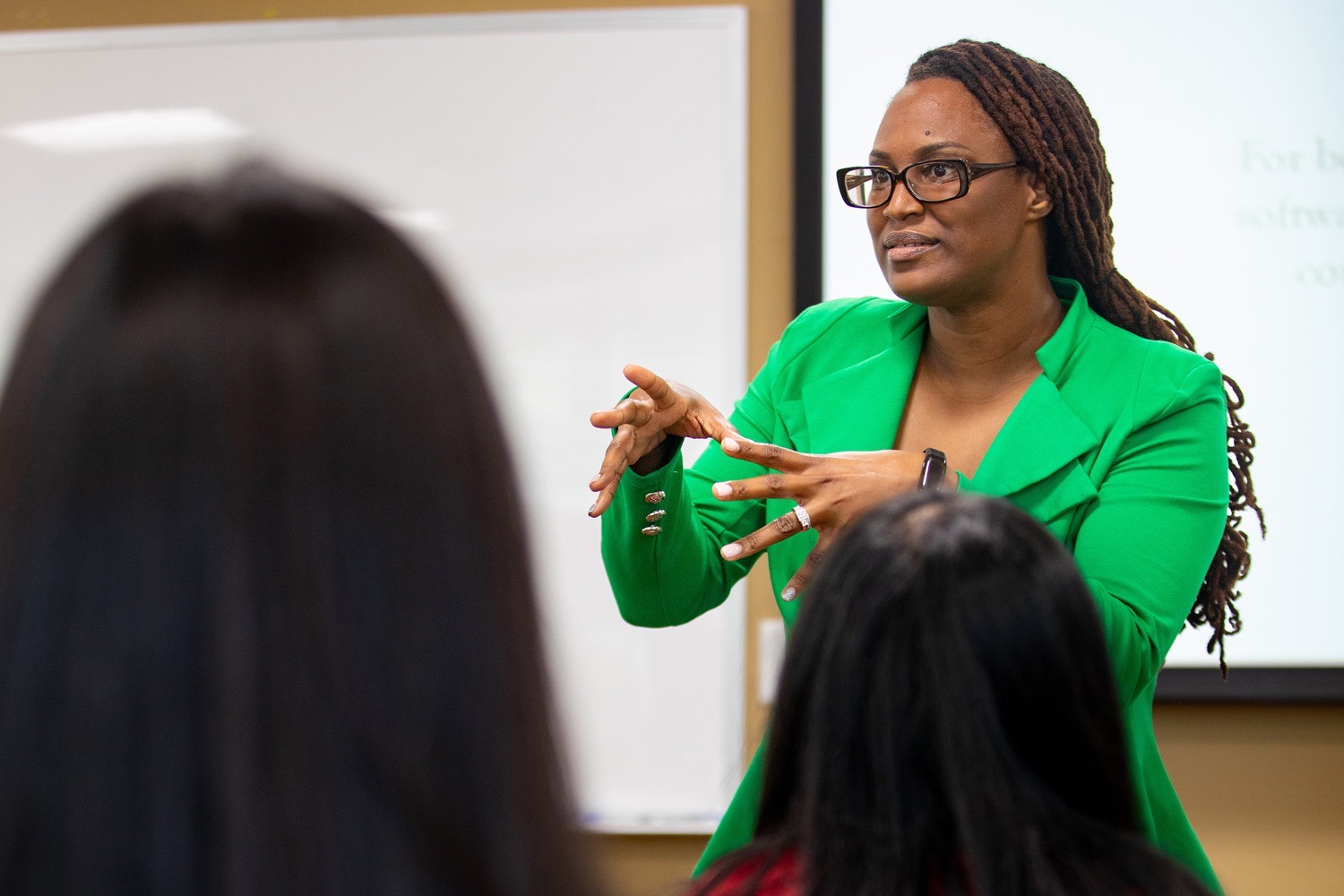
Southern’s Master of Arts in Teaching (MAT) program has grown quickly since its introduction
in Fall 2022, attracting students from across the country who are seeking certification
and excellence in the art of teaching.
Beginning with three students, enrollment in the MAT program jumped by 15 students
the following Fall semester, and in Fall 2024, 34 students were exploring classroom
management techniques while fine-tuning a philosophy of teaching, far exceeding projected
numbers.
“In response to the nationwide teacher shortage, our program is one of the best methods
for teachers to become certified,” shares Jasmine Johnson, EdS, EdD, program director
and associate professor in Southern’s School of Education, Psychology, and Counseling.
“Paraprofessionals, substitute teachers, and those switching careers can all learn
to manage and support their own classrooms.” For previously certified teachers, the
MAT helps meet continuing education requirements and can lead to new opportunities
and wage increases.
Johnson explains how being fully online is one of the benefits of Southern’s MAT.
“Graduate students often have families and full-time jobs. Having access to a degree
that individuals can work into their schedule is super convenient,” she says.
Another key element that sets Southern’s program apart is its Christ-centered focus.
“Students learn how to become the teachers who God has called them to be,” Johnson
says. “We encourage each other to emulate God’s role as Master Teacher while also
desiring to walk in His ministry and purpose. Our students are equipped not only with
the knowledge of best practices in the classroom but also the tools to teach others
about Christ.”
– By Chehalis Eno, senior English major
School of Business Students Excel
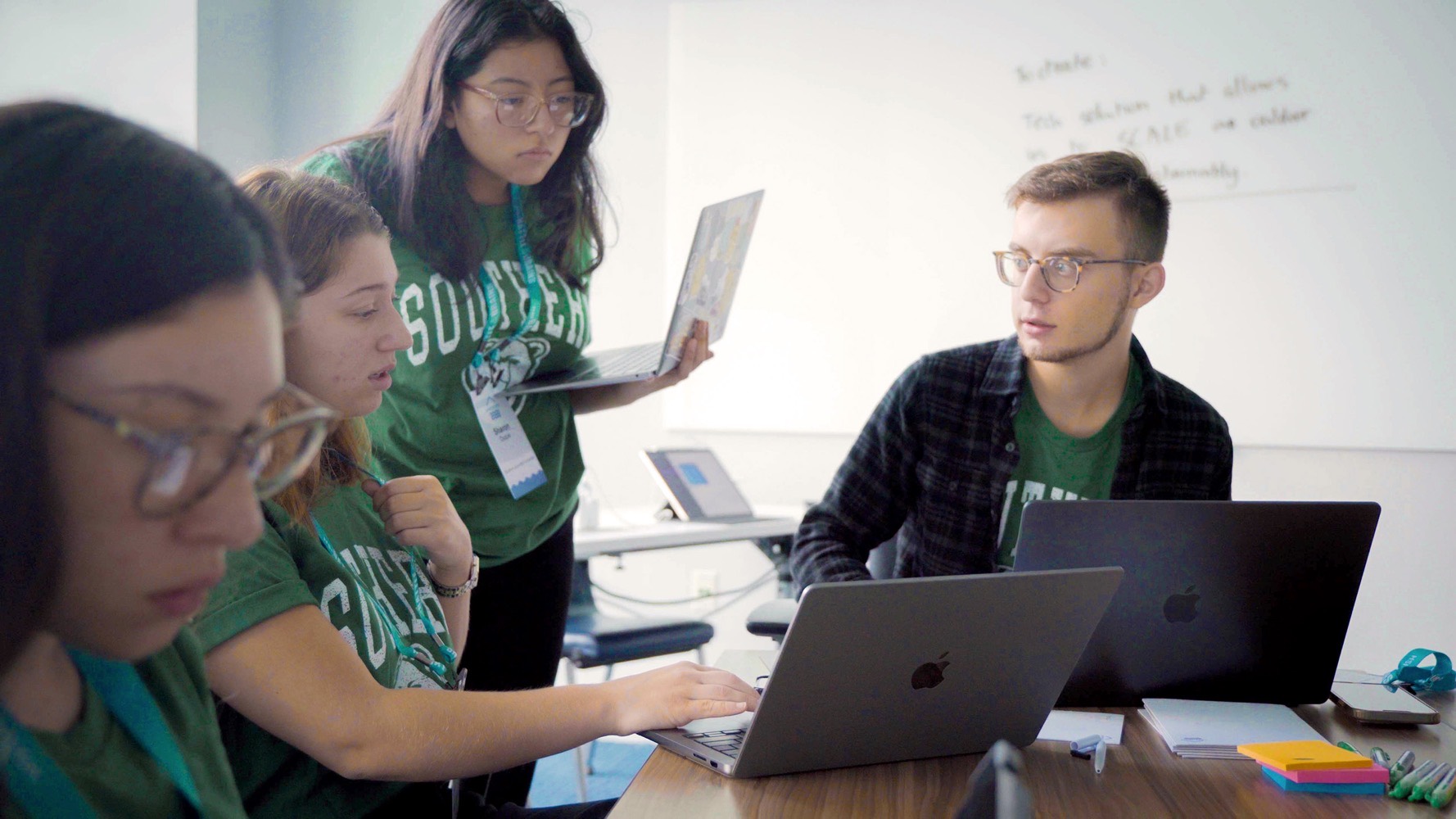
Students in Southern’s School of Business have been working hard, participating
in competitions and tackling projects simulating real-world business scenarios both
regionally and worldwide.
In a simulation of managing a startup company in the upper-level International Business course, one of Southern’s teams placed first out of the five locally competing teams, and in the 99th percentile of more than 1,000,000 simulation teams worldwide in 2024.
In another business strategy challenge, three of Southern’s teams ranked as Global Top 50 Performers out of 685 teams from 58 colleges and universities worldwide for the performance of their GLO-BUS business strategy simulations during the week of June 17-23, 2024.
Southern’s team of finance students also placed second among the 10 participating colleges and universities in last year’s Greater Tennessee Chartered Financial Analyst Institute Research Challenge.
In the Fall 2024 semester, Southern participated for the first time in the HSI Battle of the Brains, a national intercollegiate pitch competition for Hispanic-serving Institutions. Southern’s team of students made it to the finals along with six other teams after formulating and presenting strategies to solve a business challenge that was presented at the start of the event.
Fabian Lubis, senior finance major, participated in the CFA challenge and shares how the practical experience helped him further develop his skills. “Beyond the competition, the experience was invaluable. It was one of the truer tests of putting what I learned in the classroom into practice,” he shares. “From late-night financial modeling to presentation prep, we continually had to think on our feet; defending our valuation, adjusting forecasts based on new data, and ensuring our story aligned across all financials. The CFA Challenge pushed me to develop sharper critical-thinking skills, refine my ability to communicate complex assumptions, and recognize the reality that finance is never just about the numbers, but the story they tell.”
– Becky Brooks, ’03, editorial manager
In a simulation of managing a startup company in the upper-level International Business course, one of Southern’s teams placed first out of the five locally competing teams, and in the 99th percentile of more than 1,000,000 simulation teams worldwide in 2024.
In another business strategy challenge, three of Southern’s teams ranked as Global Top 50 Performers out of 685 teams from 58 colleges and universities worldwide for the performance of their GLO-BUS business strategy simulations during the week of June 17-23, 2024.
Southern’s team of finance students also placed second among the 10 participating colleges and universities in last year’s Greater Tennessee Chartered Financial Analyst Institute Research Challenge.
In the Fall 2024 semester, Southern participated for the first time in the HSI Battle of the Brains, a national intercollegiate pitch competition for Hispanic-serving Institutions. Southern’s team of students made it to the finals along with six other teams after formulating and presenting strategies to solve a business challenge that was presented at the start of the event.
Fabian Lubis, senior finance major, participated in the CFA challenge and shares how the practical experience helped him further develop his skills. “Beyond the competition, the experience was invaluable. It was one of the truer tests of putting what I learned in the classroom into practice,” he shares. “From late-night financial modeling to presentation prep, we continually had to think on our feet; defending our valuation, adjusting forecasts based on new data, and ensuring our story aligned across all financials. The CFA Challenge pushed me to develop sharper critical-thinking skills, refine my ability to communicate complex assumptions, and recognize the reality that finance is never just about the numbers, but the story they tell.”
– Becky Brooks, ’03, editorial manager
Southern in the News
We’re proud to see our students recognized through media outlets. Here are a few
recent highlights:
Student Creates Interactive Traffic Map to Help Reduce Accidents — Story on Local3News
Physics Club Students Teach Quantum Basics at Local Schools — Story on Chattanoogan.com
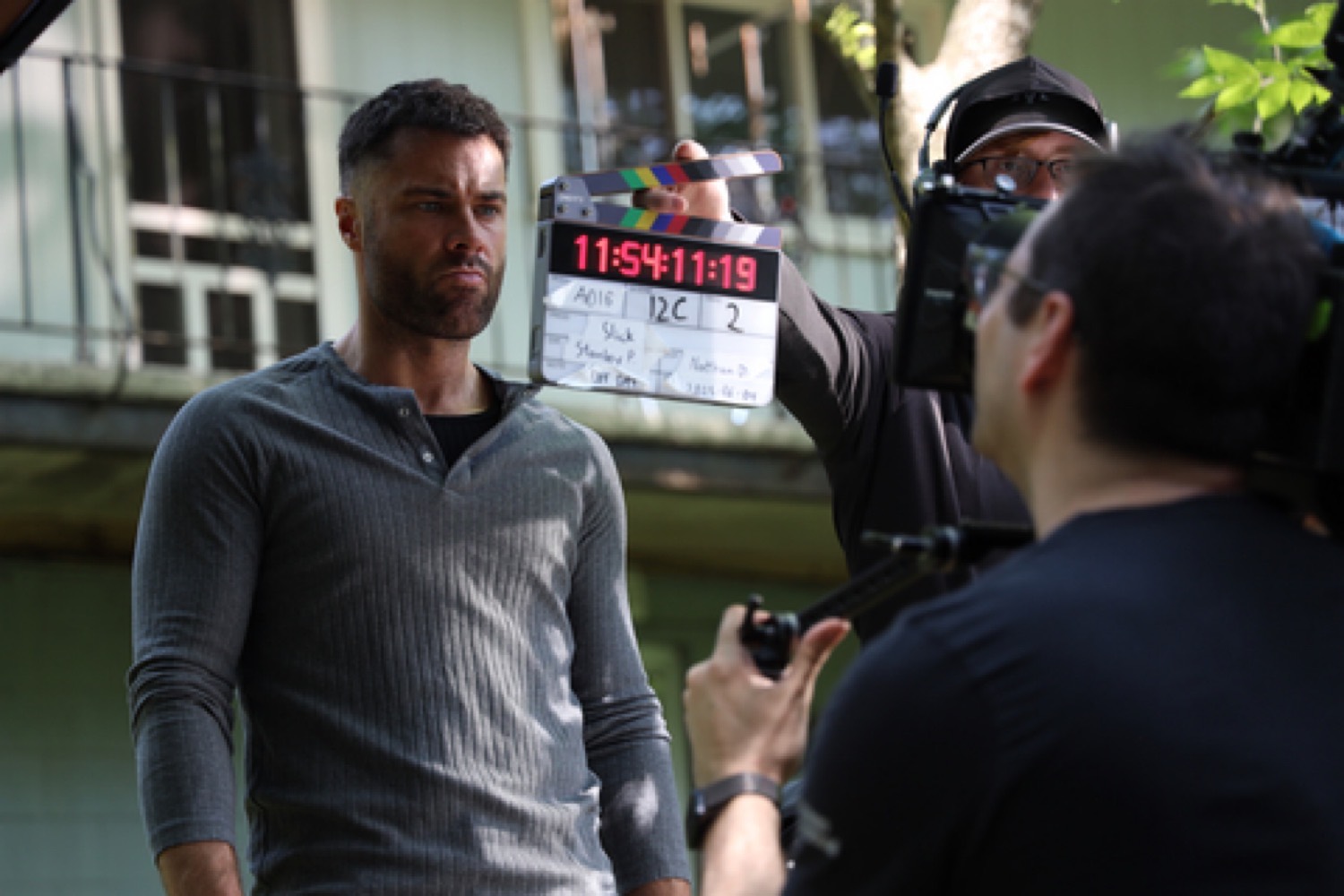
Hope Studios and Southern Adventist University Partner on Film — Story on Businesswire.com
Computing Podcast Makes Academic Research Accessible — Story on Chattanoogan.com
Student Creates Interactive Traffic Map to Help Reduce Accidents — Story on Local3News
Physics Club Students Teach Quantum Basics at Local Schools — Story on Chattanoogan.com
Hope Studios and Southern Adventist University Partner on Film — Story on Businesswire.com
Computing Podcast Makes Academic Research Accessible — Story on Chattanoogan.com
Upcoming Events
Carolina Camp Meeting Alumni Lunch | May 29
Georgia-Cumberland Camp Meeting Alumni Event | May 30
Join us for a sweet treat and explore today’s campus while connecting with alumni. Please RSVP at southern.edu/alumnievents.
Kentucky-Tennessee Camp Meeting Alumni Event | May 30
Enjoy a sweet treat at Highland Academy while learning about the opportunity to adopt a student missionary in prayer. Please RSVP at southern.edu/alumnievents.
Philanthropy Conference | July 14-16
Hone your missional fundraising skills at the first Philanthropy Conference at Southern.
Learn from experts from K-12, higher education, healthcare, private nonprofits, community
foundations, consultants, and leadership executives about how to effectively fundraise
for projects. Early bird registration is open through April 1. Visit southern.edu/philanthropyconference for details.
Alumni Homecoming Weekend | October 22-25
Save the date for our annual Homecoming Weekend and the chance to connect with alumni, revisit memories, participate in workshops, and attend department reunions! Registration and schedules will be available soon at southern.edu/homecoming.