
News
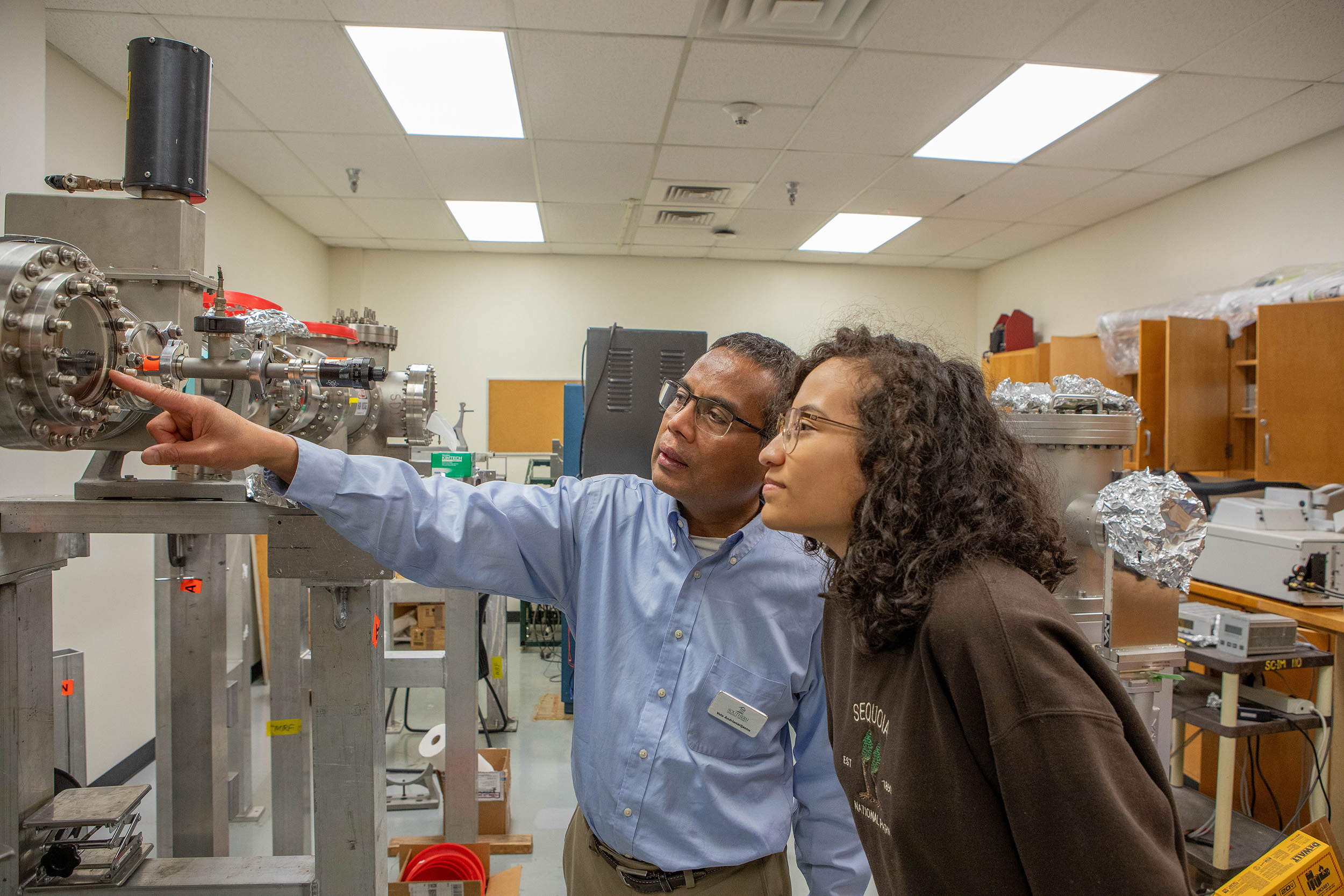
The U.S. Department of Energy awarded Southern Adventist University’s School of Engineering and Physics a Reaching a New Energy Sciences Workforce (RENEW) grant of $156,000 in early 2025 to further nuclear fusion research through curriculum development, bootcamps, and student internships.
Nuclear fusion is a cousin to nuclear fission, which is used as an energy source across the world. “Instead of fission—taking something heavy, such as uranium, and splitting it apart—we take something light, often hydrogen, and fuse it together to release energy,” explains Sean Walters, PhD, associate professor. “The technology has the potential to become a very efficient and controlled fission alternative.”
Under the guidance of Tennessee’s Oak Ridge National Laboratory, the government’s largest multi-disciplinary research and development center, Southern partnered with several other universities, including Missouri University of Science and Technology, Tennessee State University, Tennessee Tech University, University of Tennessee at Knoxville, and Tuskegee University in Alabama. Two professors in Southern’s School of Engineering and Physics, principal investigator Walters and Vola Andrianarijaona, PhD, spearheaded the initiative.
Creating Curricula
Professors at each of the universities are creating curricula to be implemented free of charge in classrooms across the United States. “At Southern, we’re planning to create short, two-week modules on specific fusion energy topics that can be inserted into any class,” Walters says. “That way, universities can introduce students to these new concepts without asking them to take extracurricular classes on top of their required course loads.”
Classes on nuclear fusion typically begin in graduate school, since the topic is highly specific for an undergraduate degree; however, larger universities have begun implementing specialty tracks in fusion engineering. Southern’s plans to introduce students to nuclear fusion keep the university on the cutting edge of education trends in undergraduate engineering programs.
Guaranteed Internships
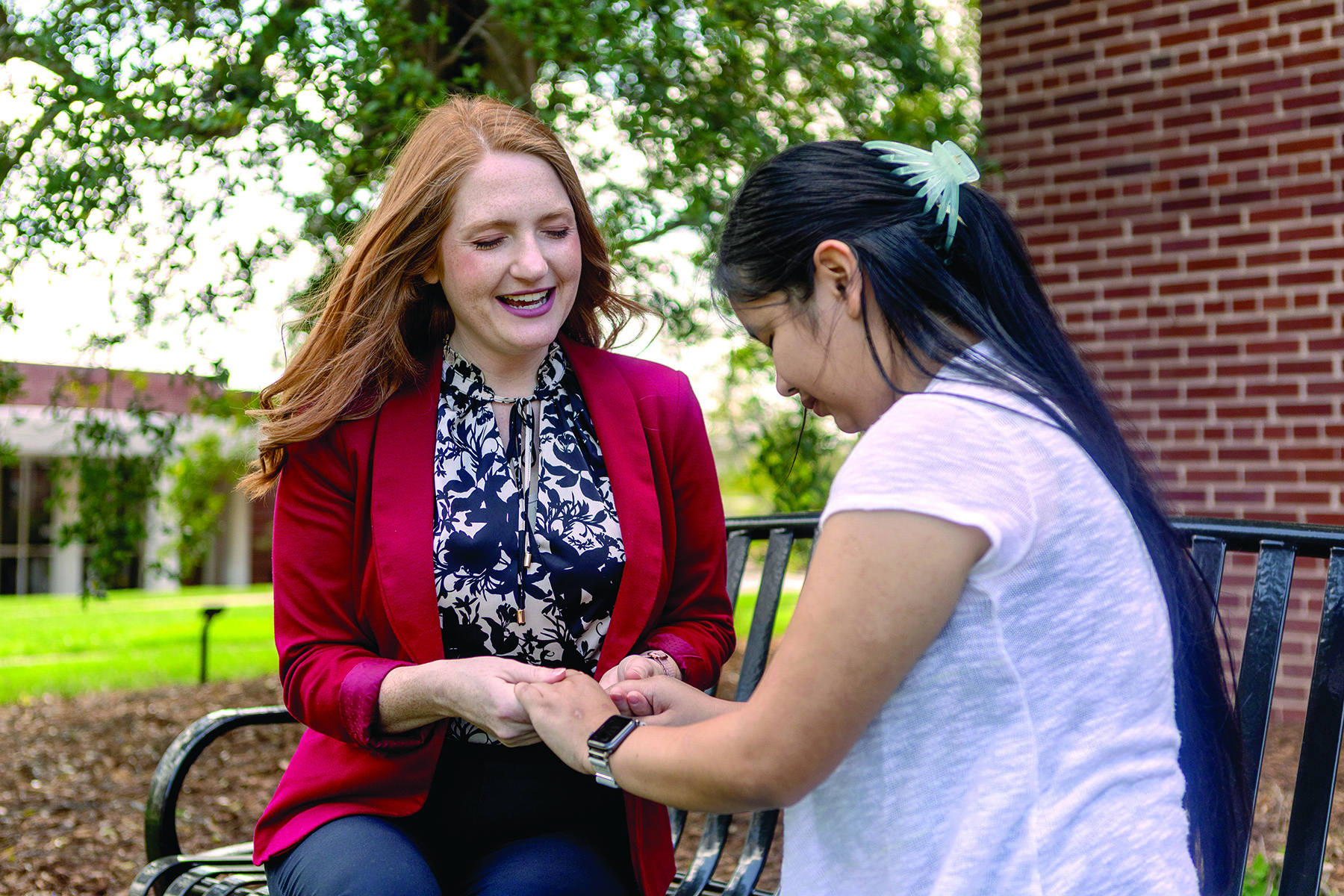
The RENEW grant funds will also go toward guaranteed internships for Southern students, first at Oak Ridge National Laboratory and then at private fusion-energy companies. Angelina Castillo, junior physics and math double major, earned the first spot at the Oak Ridge lab in Summer 2025.
“Nuclear fusion has a lot of untapped potential, and I was very grateful and excited for the chance to intern in the field,” Castillo says. “I worked to find a process to recycle the fuel used in nuclear fusion, exploring ways to separate the different particles in the fuel into the parts that can be reused and the parts that can’t.”
Castillo has already furthered nuclear fusion through her work at Southern with Andrianarijaona, who has a long-standing partnership with the national laboratory in Oak Ridge, stretching back to 2009. For the past five years, Andrianarijaona has coordinated the participation of Southern students on the laboratory’s beamline for ion-neutral collisions.
“Nuclear fusion is unstable in part because when particles fly out after the reaction, they have enough kinetic energy to melt the walls containing it,” Castillo explains. “Lining the walls with molecular hydrogen could absorb some of the particles’ energy, and the beamline we’re building will help us measure how much energy hydrogen can hold, helping to determine the viability of hydrogen-lined fusion chambers.”
The views and opinions of campus guests do not necessarily reflect the official policy or position of Southern Adventist University. An individual's or group's invitation to speak or present on campus should not be regarded as a university endorsement of their philosophies and beliefs.