Celebrate the Christmas season with an evening of festive music featuring the Annie Moses Band, a family of Juilliard-trained musicians known for their unique blend of classical, folk, and contemporary sounds. Experience the Christmas Tree Lighting and enjoy donuts and hot chocolate at 6:30 p.m., then come inside Iles P.E. Center for this special holiday concert at 7:30 p.m. on Tuesday, December 1.
QuickNotes | November 2026
Peer Bible Studies Gain Momentum
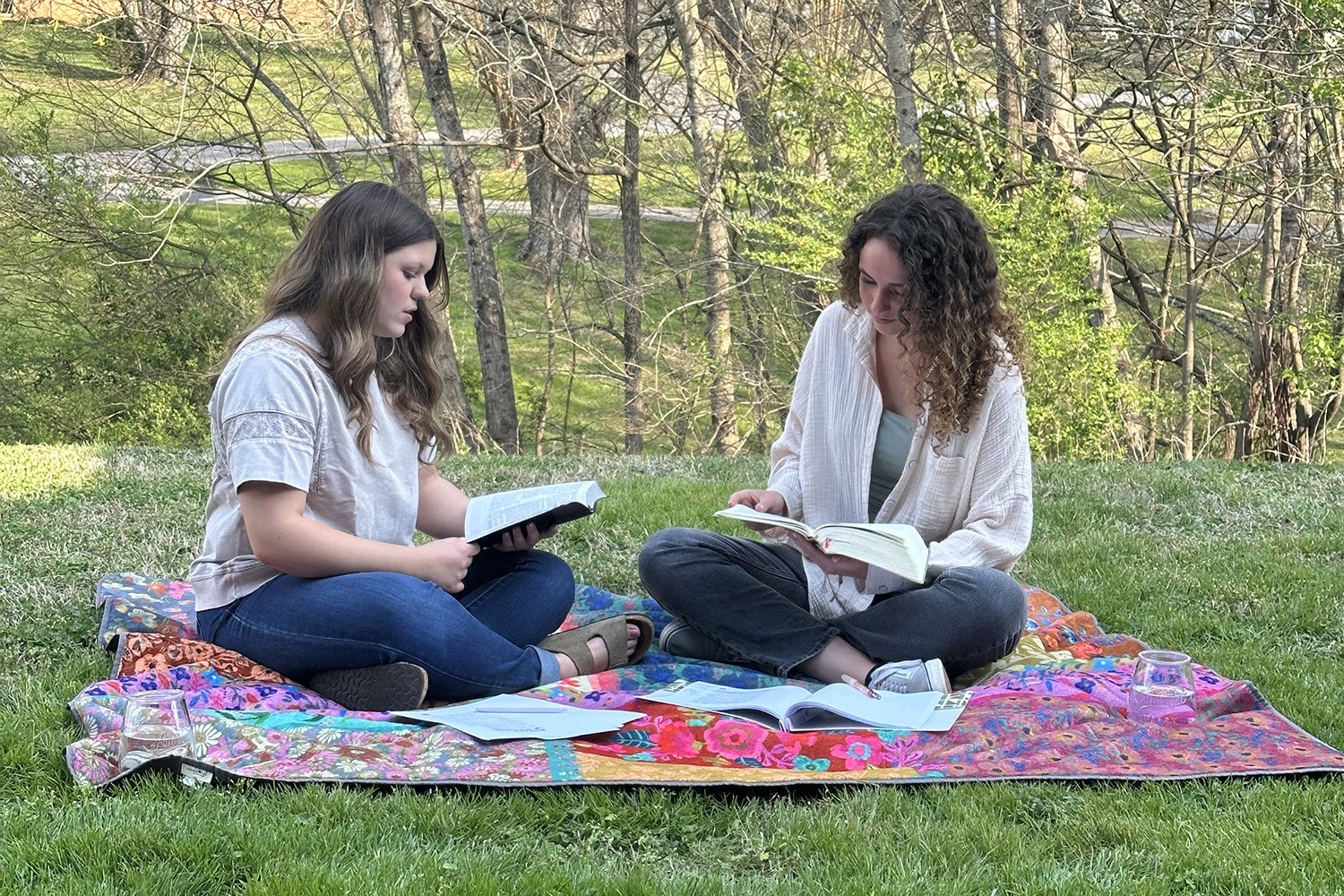
A growing demand for Bible studies among students at Southern Adventist University has led to the expansion of peer Bible study groups across campus, with 57 studies launched during the 2025-2026 school year.
Leaders in the university’s Office of Ministry and Missions say the initiative was developed after a growing number of students expressed interest in studying Scripture.
“The goal was for every student on campus who requested Bible studies to receive them,” says Manuel Gomez, associate chaplain in Southern’s Office of Ministry and Missions. “We were seeing that interest increase, and we needed a way to meet it.”
To respond, Ashley Velbis, last year’s assistant chaplain, and Katie-Jane Emde, a senior biology major and Bible study coordinator last year, created an organizational framework for students to lead Bible studies for their peers. Student volunteers were trained at the beginning of each semester and provided with study materials before being paired with other students who had requested Bible studies. The volunteers also received ongoing support throughout the process.
“We emphasize how to create a culture of transformational relationships,” Velbis explains. “Rather than simply imparting knowledge to a person, we want these spiritual leaders to learn to care about and support each mentee throughout his or her collegiate life.”
That emphasis on connection has already made an impact for students like Sharon Edwin, a graduate student pursuing a master’s degree in clinical mental health counseling. She signed up for Bible studies at the beginning of the Winter 2026 semester but almost backed out after receiving unexpected medical news.
“I was so sad and disappointed, because I am alone in this country,” Edwin recalls. “My parents aren’t here, so the health challenge was very overwhelming.”
Spiritually, Edwin felt like she was drifting away from God. Although she initially canceled her first meeting, Edwin’s instructor reached out to reschedule. What began as a hesitant commitment for Edwin soon grew into a weekly rhythm.
“After the studies, I made a pact to read the Bible just one hour a day,” Edwin says.
“It’s been three weeks now, and I feel more connected to Jesus.”
For student instructors, the experience is equally formative. Sadie Elias, a junior
psychology major and Bible study instructor, says the one-on-one format allows for
deeper, more personal conversations.
“We can focus on what is relevant to our lives and compare different experiences,” Elias says.
“When you hear someone else’s doubts, you can choose to journey through those same issues yourself. I’m grateful that I have this experience to walk through questions in community.”
While balancing schoolwork with leading Bible studies can be challenging, Elias says the commitment has been worthwhile.
“Sometimes I have wondered why I would add something else to my schedule,” she says. “But after I prepare for a study or meet with a mentee, I feel refreshed. I’m always glad I did it.”
This kind of shared growth is central to the program’s purpose. Gomez points to the Biblical example of Barnabas, who was known for mentoring and encouraging others, as a model for student instructors.
“These types of connections require someone who is willing to step in and invest in others,” Gomez says. “If there is no Barnabas, there is no Paul.”
By the end of last school year, leaders had trained a total of 27 student instructors, allowing every student’s request for Bible study to be met.
Gomez shares that they plan to continue investing in the program to help it grow while maintaining a high level of care and quality. For this school year, an additional student Bible study coordinator position has been filled to provide better support for the instructors, follow up with students more quickly, and continue recruiting and training new instructors as interest grows.
Gomez says, “Ultimately, we want Southern to be a place where students don’t just earn a degree, but grow as disciples of Jesus who will make a spiritual difference everywhere they go.”
~ by Genessis Castellanos-Radillo, sophomore English major
PTA Program Fully Accredited
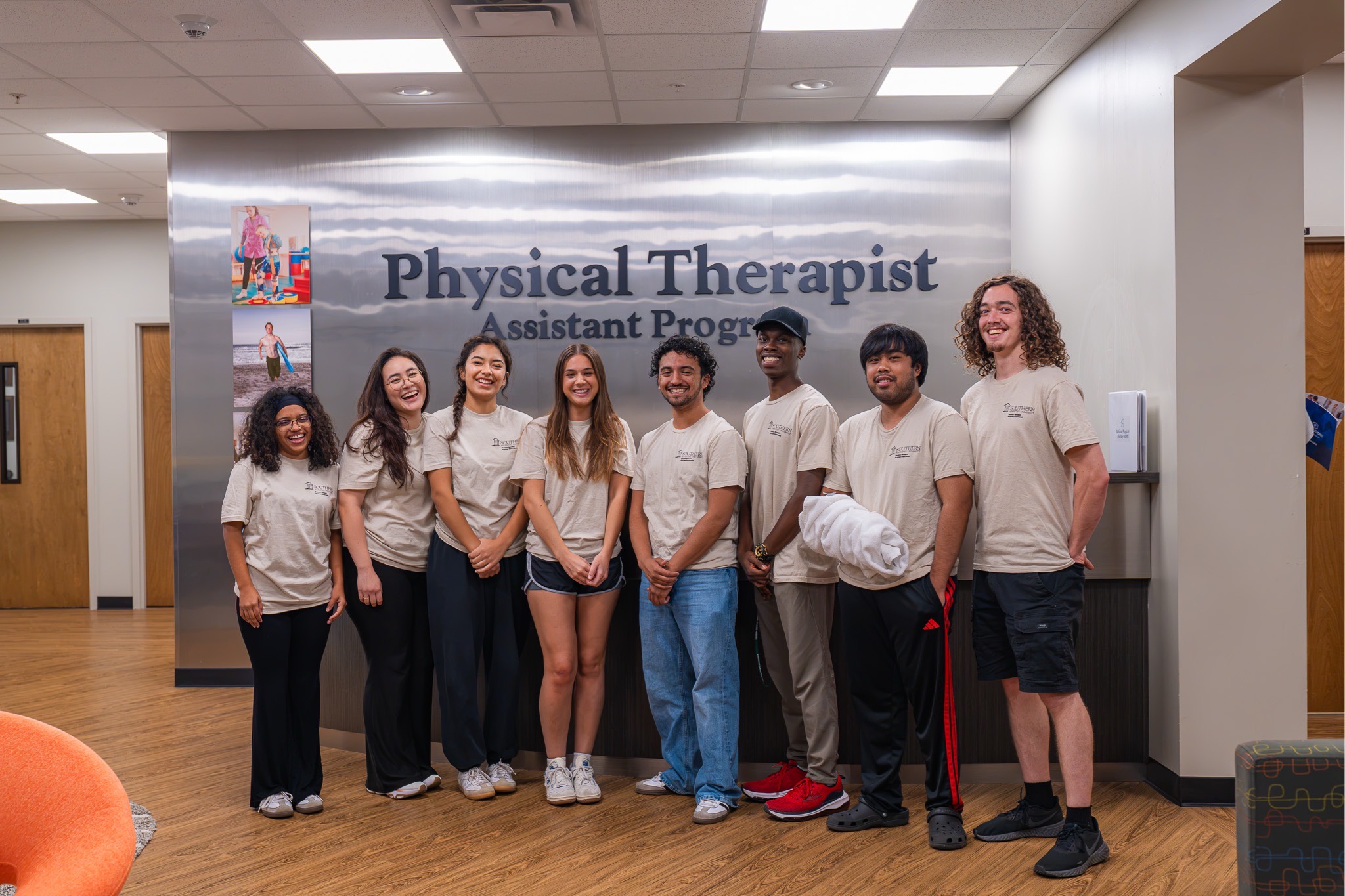
This fall, Southern’s physical therapist assistant (PTA) program received a full 10-year accreditation from the Commission on Accreditation in Physical Therapy Education (CAPTE). Graduating from a CAPTE-accredited program is a requirement to become a licensed PTA in the United States, but the accreditation process is far from easy, requiring years of documentation and extensive work from program leadership.
The PTA program, housed in Fleming Plaza on campus, was founded in 2019. In the program’s first year, it achieved an initial 5-year CAPTE accreditation similar to every new physical therapist assistant program in the country. This is the standard first step for all new programs, and it carries full accredited status. At the end of that initial term, program leadership submitted extensive documentation for the next level of review. In September, CAPTE granted Southern’s PTA Program a 10-year accreditation, determining that it had met all standards. This is the longest accreditation term CAPTE awards and the expected standard for established programs.
In its seven years of operation, the PTA program has not just met expectations but exceeded them. An 85% national board exam pass rate and a 90% employment rate are required for CAPTE accreditation. Southern’s PTA program has a 92% exam pass rate and a 100% employment rate.
“We've had graduates go on to be clinic directors,” says Christopher Stewart, DPT, director of the PTA program. “We've had graduates go on to physical therapy school. We've had graduates go on and expand their knowledge into the areas of technology, business marketing, and other areas of that nature too.”
The PTA program is structured for success with students’ best interests in mind. After completing a year of required general education courses, students can apply for PTA classes. Because the following three semesters consist of only PTA courses, students have the opportunity to travel throughout the country or even abroad for hands-on clinical experience without other coursework competing for their time. Additionally, students who pass the board exam may also pursue licensure in states beyond Tennessee.
Above all, the PTA program promotes Southern’s mission of Christlike care for others.
“I tell my students that one of the primary pillars of our program is discipleship,” says Stewart. “We want to go out and be witnesses for Christ. I believe physical therapy closely aligns with what Christ did when He was here on this earth. We take people who have lost function in their limbs and teach them to regain usage. The students that come to this program, even if they find it to be somewhat of a struggle, always find it has been a very rewarding career.”
~ by Isabella Dixon, junior English and communication double major
Fifteen Years, 1,100 Students, One Bible
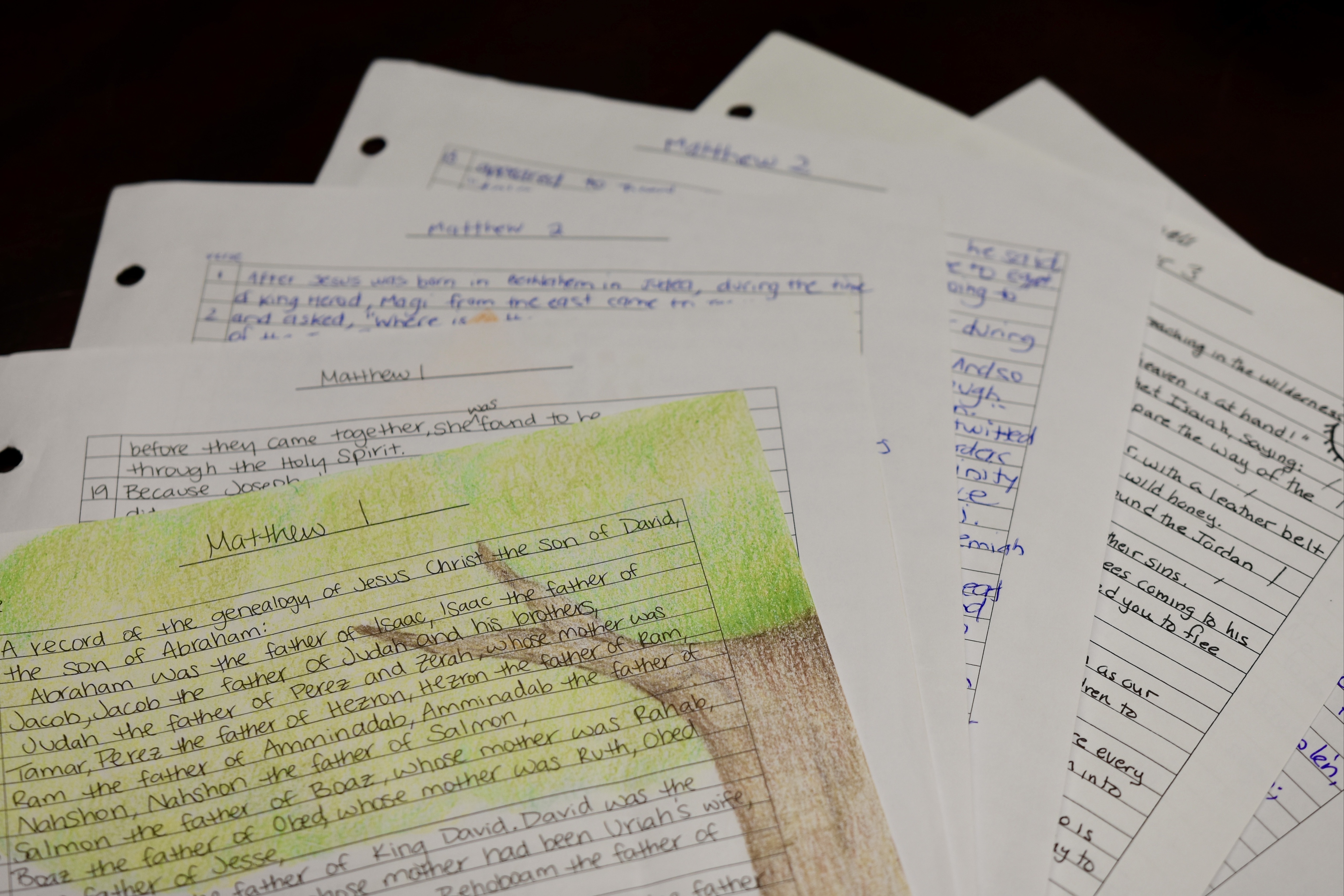
For 15 years, Southern students have contributed to a unique project that combines faith, creativity, and a little old-fashioned penmanship. More than 1,100 students have participated in a project to transcribe the entire Bible by hand, creating a collection that now fills two shelves in the office of Barry Tryon, professor in Southern's School of Religion.
The project began as a classroom assignment inspired by Tryon's experience at a youth festival, where thousands of teenagers copied the Bible in just two-and-a-half days. Years later, he adapted the concept for his own students, hoping to help them slow down, engage more thoughtfully with Scripture, and appreciate how biblical texts were preserved through the centuries.
Each semester, students in Tryon's Life and Teachings of Jesus and Christian Spirituality classes receive assigned chapters to copy by hand. They sign their work and add illustrations inspired by the passages, combining artistic expression with careful attention to the text. Students may choose their preferred Bible translation or language, resulting in a collection that includes more than 17 languages, including Spanish, Portuguese, Korean, Chinese, Japanese, and Latvian.
For Keren Sampaio, a sophomore double majoring in culinary arts and fine arts, writing her chapter in her native Portuguese made the assignment especially meaningful. The experience helped her process and reflect on Scripture while leaving her own contribution to the collection.
This semester, students are completing the final chapters in 2 Kings, bringing the 15-year undertaking to a close. Plans to preserve the collection are still being considered, including possible digitization.
What began as a single classroom assignment has become a record of more than a decade of Southern students engaging with God's Word, one handwritten chapter at a time.
~ Adapted from an article by Bella Lagos, junior journalism-digital broadcast major, Southern Accent.
A New Home for Business Students
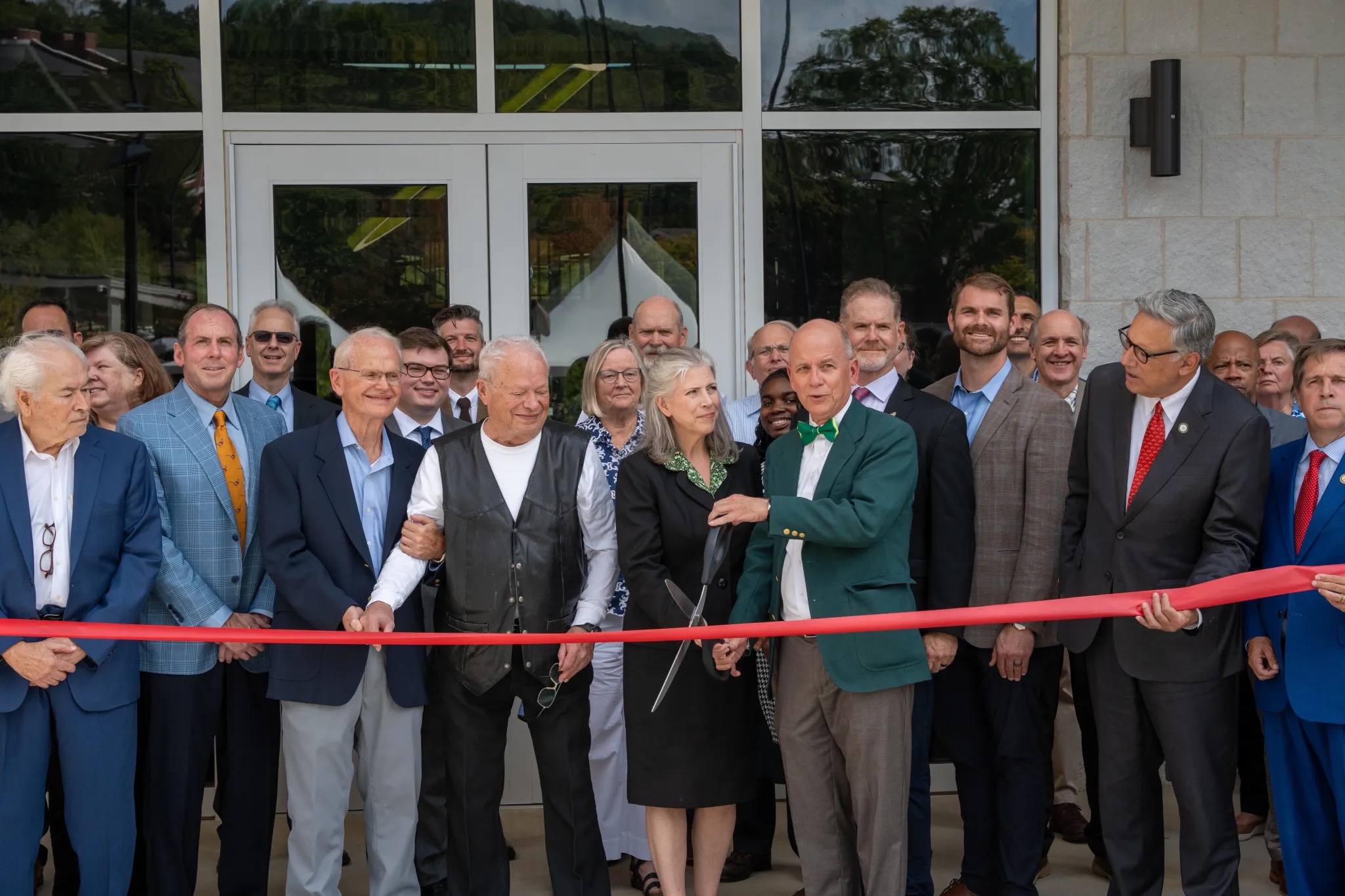
Southern celebrated the grand opening of the Ruth McKee School of Business building on October 2, marking the completion of a fully donor-funded project that provides a dedicated home for business education and new opportunities for students across disciplines.
The celebration brought together alumni, donors, university leaders, students, members of the McKee family, and community representatives for a dedication ceremony and ribbon cutting. Although classes began in the building earlier this fall, the event provided an opportunity to recognize the years of planning, fundraising, and collaboration that made the project possible.
For Franklin Farrow, ’93, a former Southern business student who chaired the building's fundraising campaign, seeing the completed facility was particularly meaningful. Farrow, whose company, Morning Pointe Senior Living, employs Southern students, interns, and graduates, described the experience of returning to campus as both an alumnus and a donor as amazing.
The building honors Ruth McKee, co-founder of the family business that became McKee Foods. Her great-granddaughter, Brittany McKee East, attended the dedication and expressed appreciation for recognizing Ruth's contributions to the company's history.
For students, the building is already changing the experience of studying business at Southern. Previously, business courses shared space with other departments in Brock Hall. Now, students have dedicated areas to study, collaborate, meet with professors, and participate in Business Club activities. The new facility includes a stock ticker in the lobby, study spaces, and a fourth-floor auditorium. Students from other academic programs also use the building for classes and studying.
Farrow hopes the new space will encourage collaboration across disciplines and help Southern respond to a rapidly changing business environment. Dionne Felix, associate vice president for Academic Administration, emphasized that while facilities and technology may change, Southern's focus on mission and service should remain central to the education students receive.
The building represents an investment not only in business education but also in preparing future generations of Southern graduates for meaningful careers and lives of service.
~ Adapted from an article by Jehiely Balabarca, senior strategic communications-public relations major, Southern Accent.
Southern Alum Returns to Lead Wind Symphony
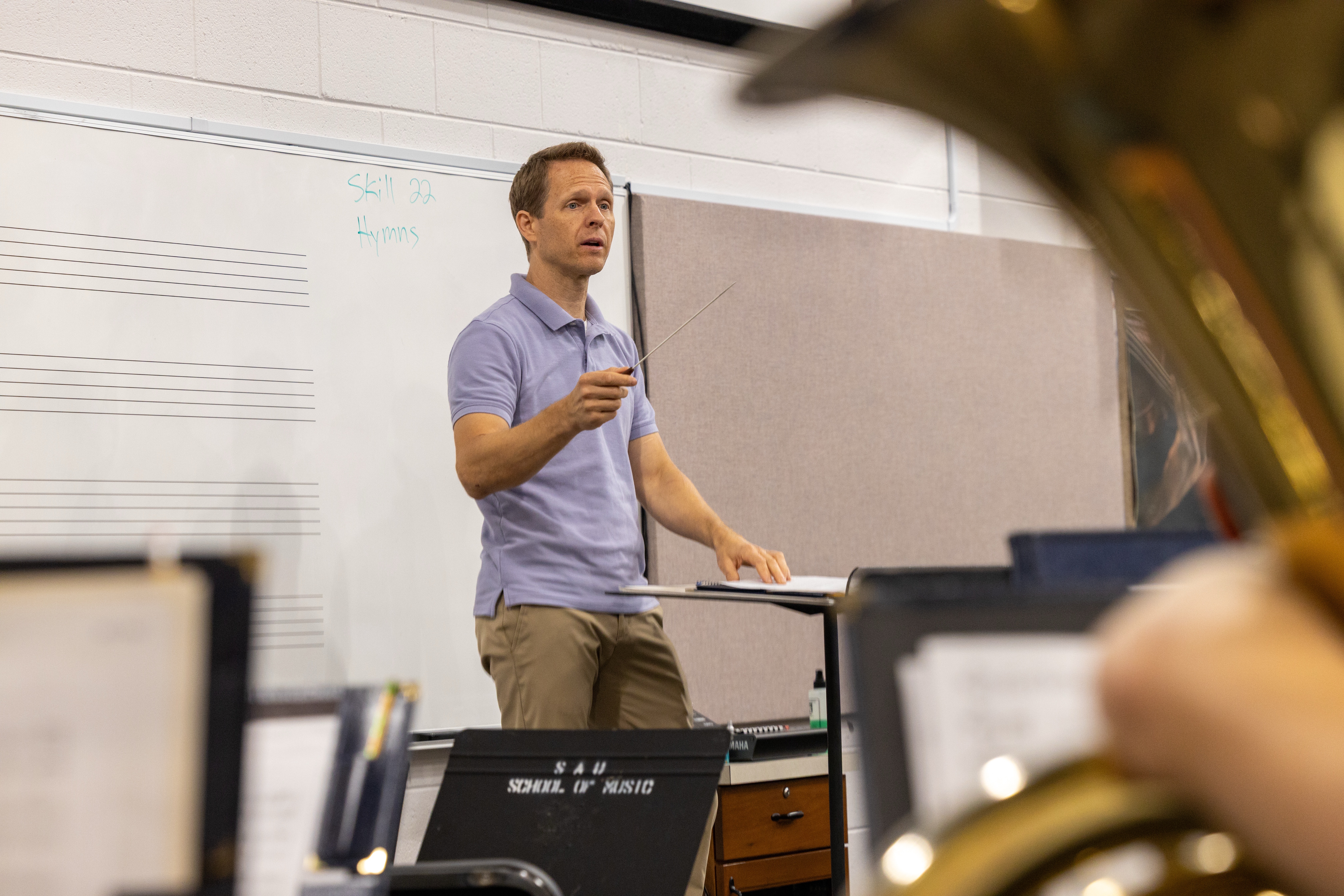
For Wesley Bradford, ’01, returning to Southern Adventist University as assistant professor and band director in the School of Music feels a lot like coming home. A former Southern student, Bradford joined the faculty this fall following the retirement of Ken Parsons, who taught at the university for 26 years.
Bradford’s connection to Southern extends well beyond his student years. After returning to the Chattanooga area in 2009, he remained involved with the university’s music program for more than 15 years, performing with the Wind Symphony, Symphony Orchestra, and Horn Ensemble. Some of his new faculty colleagues were once his instructors.
“I’m excited about the opportunity to give back to a university that played such an important role in my own development and to invest in the next generation of students,” Bradford said.
His musical journey began with the gospel music his father played and sang at home. Bradford first received formal music instruction in ninth grade at Auburn Adventist Academy, where he learned to play the cornet. He later studied French horn performance at La Sierra University before switching to music education and transferring to Southern during his sophomore year.
His musical interests have always been broad. As a student, he sang in choir, played in concert band and orchestra, performed tuba in community brass, and started a vocal octet that became a student-led chamber choir. He has also performed French horn with the Chattanooga Symphony Orchestra.
Despite his extensive musical experience, Bradford describes himself primarily as a church musician. His approach to teaching reflects that perspective, emphasizing music as both a means of worship and a lifelong source of joy.
Under his direction, the Wind Symphony has adopted a rehearsal schedule that provides dedicated practice time for individual instrumental sections. Linton Feitosa, who is pursuing a master’s degree in computer science, says Bradford brings creativity, enthusiasm, and deep musical knowledge to rehearsals, including the practice of playing a hymn as a prayer.
Bradford hopes students will develop more than technical proficiency during their time at Southern. He wants them to leave with the confidence and skills to continue making music independently, whether through performance, worship, or personal enjoyment.
“Music should be more than something we do while we’re in school,” he said. “It should be enjoyable, meaningful, stimulating, and even restorative.”
Adapted from an article by Raquel Delgado, Southern Accent.
School of Business Students Excel
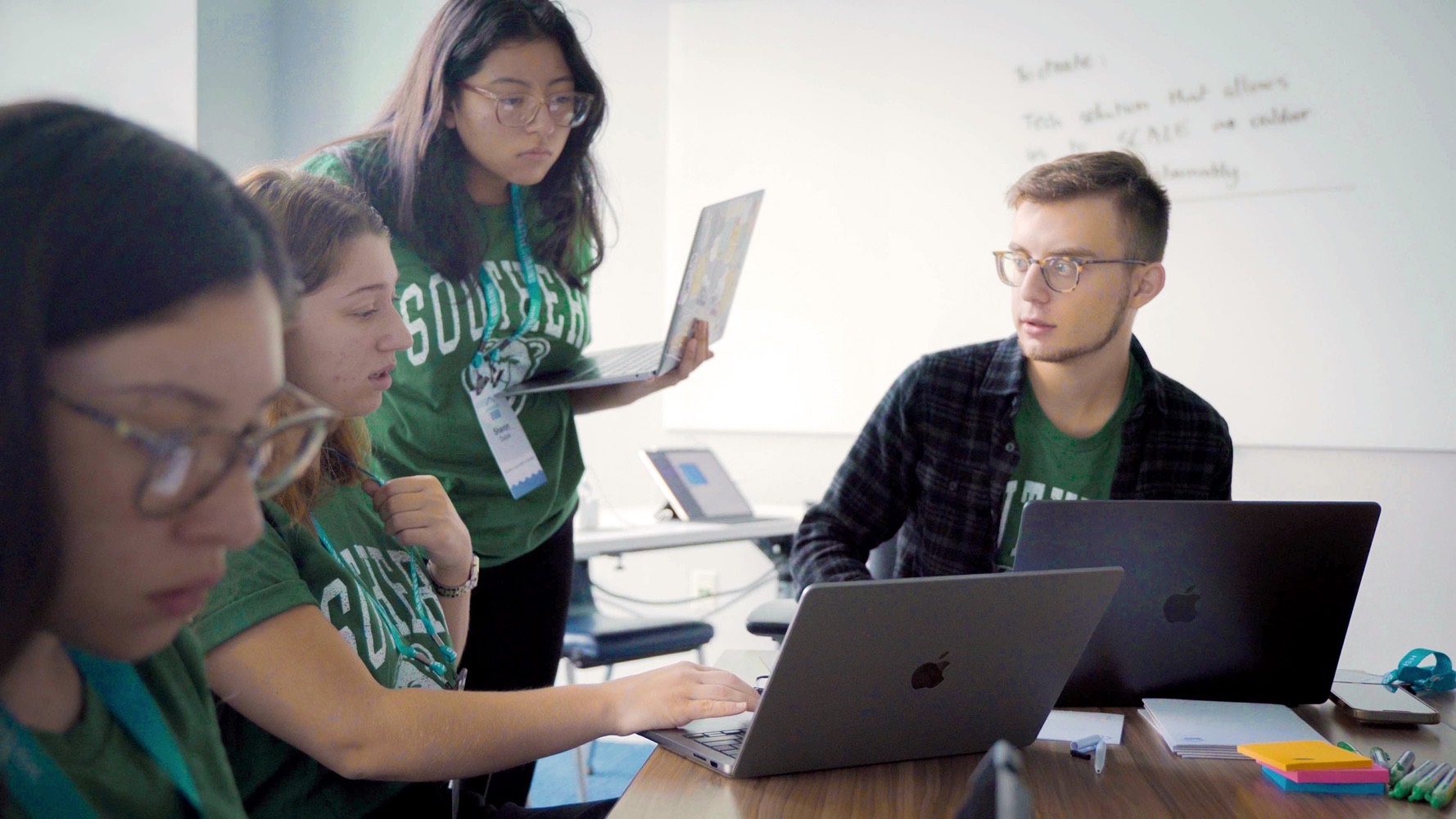
Students in Southern’s School of Business have been working hard, participating
in competitions and tackling projects simulating real-world business scenarios both
regionally and worldwide.
In a simulation of managing a startup company in the upper-level International Business course, one of Southern’s teams placed first out of the five locally competing teams, and in the 99th percentile of more than 1,000,000 simulation teams worldwide in 2024.
In another business strategy challenge, three of Southern’s teams ranked as Global Top 50 Performers out of 685 teams from 58 colleges and universities worldwide for the performance of their GLO-BUS business strategy simulations during the week of June 17-23, 2024.
Southern’s team of finance students also placed second among the 10 participating colleges and universities in last year’s Greater Tennessee Chartered Financial Analyst Institute Research Challenge.
In the Fall 2024 semester, Southern participated for the first time in the HSI Battle of the Brains, a national intercollegiate pitch competition for Hispanic-serving Institutions. Southern’s team of students made it to the finals along with six other teams after formulating and presenting strategies to solve a business challenge that was presented at the start of the event.
Fabian Lubis, senior finance major, participated in the CFA challenge and shares how the practical experience helped him further develop his skills. “Beyond the competition, the experience was invaluable. It was one of the truer tests of putting what I learned in the classroom into practice,” he shares. “From late-night financial modeling to presentation prep, we continually had to think on our feet; defending our valuation, adjusting forecasts based on new data, and ensuring our story aligned across all financials. The CFA Challenge pushed me to develop sharper critical-thinking skills, refine my ability to communicate complex assumptions, and recognize the reality that finance is never just about the numbers, but the story they tell.”
– Becky Brooks, ’03, editorial manager
Southern in the News
We’re proud to see our students recognized through media outlets. Here are a few
recent highlights:
Student Creates Interactive Traffic Map to Help Reduce Accidents — Story on Local3News
Physics Club Students Teach Quantum Basics at Local Schools — Story on Chattanoogan.com
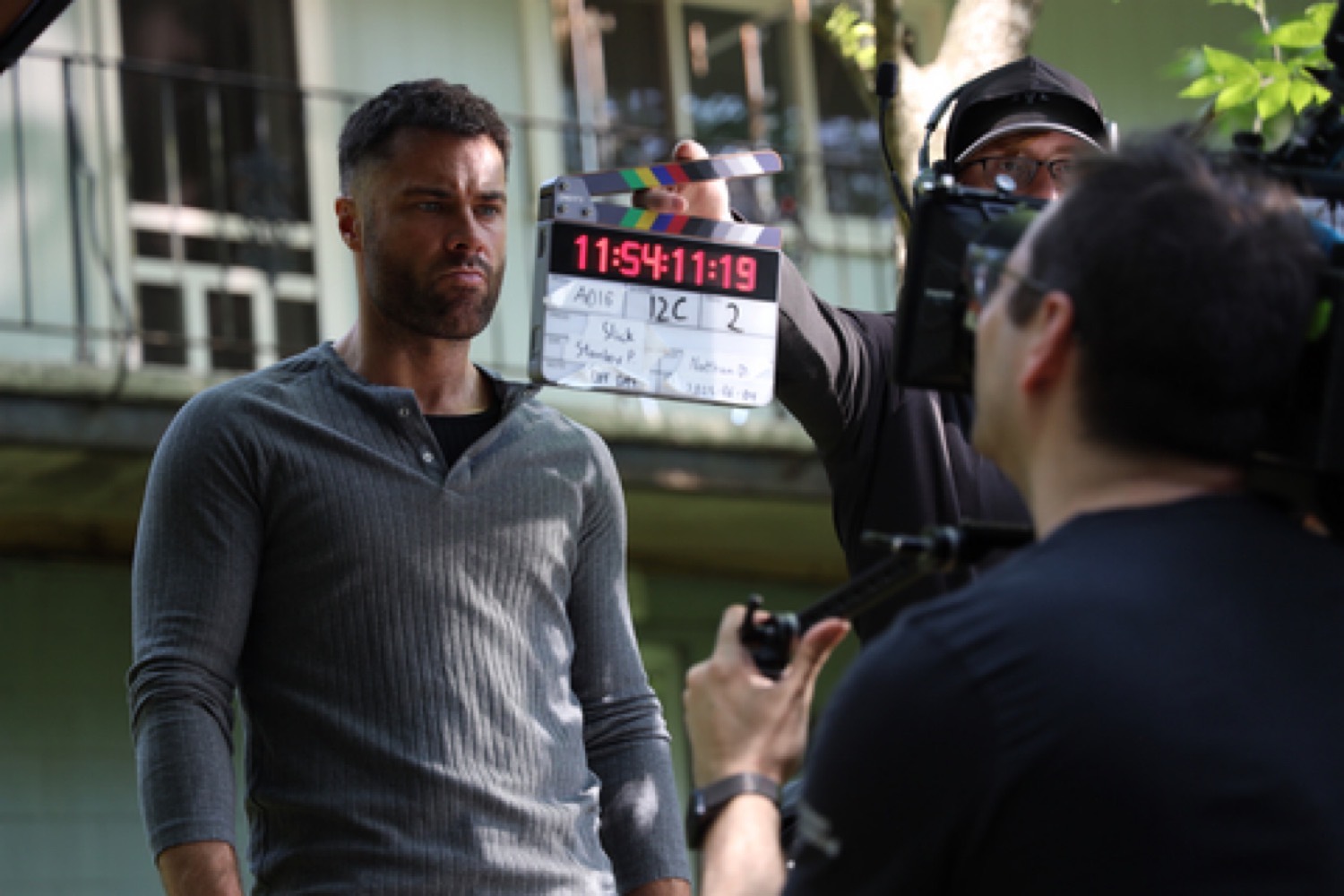
Hope Studios and Southern Adventist University Partner on Film — Story on Businesswire.com
Computing Podcast Makes Academic Research Accessible — Story on Chattanoogan.com
Upcoming Events
Christmas Tree Lighting and Annie Moses Band | December 1
Christmas Concert: Sounds of the Season | December 5
Southern’s Wind Symphony, Southern Steel, and Ringtones will perform a family-friendly selection of Christmas music on Saturday, December 5, at 8 p.m. in Iles P.E. Center. Admission is free, tickets are not required, and the concert will be livestreamed. For more information and livestream details, visit southern.edu/musicevents.
Christmas in the Square with Engage Worship | December 6
Horn Ensemble Christmas Concert and Sing-Along | December 7
School of Music Choirs and Symphony Orchestra Christmas Concert | December 12
Washington, DC, Alumni Reception and Vienna Boys’ Choir Concert | December 12
Join fellow alumni and special guests Brian Liu, ’00, executive and artistic director of the Anna H. Wang Concert Series, and a representative from the Austrian Embassy for light refreshments and conversation before enjoying the Vienna Boys’ Choir's Christmas in Vienna concert, a featured performance of the Anna H. Wang Concert Series. Tickets for the concert are not included, but Southern alumni are offered discounted tickets. Learn more at southern.edu/alumnievents.
Fine Art Majors’ Open Studios Night | December 13
Explore artwork by Southern’s fine art students, including drawing, painting, ceramics, sculpture, and more. Meet the artists and see both finished pieces and works in progress on Sunday, December 13, from 6:30-8:30 p.m. in the Art Annex, Room 1280. This free event is open to the public, with light refreshments provided.
Alumni Mission Trip to Kenya | June 16-29, 2027
Alumni and friends are invited to join us in Kenya for a building and outreach project at Kimogoro Adventist School. This family-friendly opportunity is provided in partnership with Maranatha Volunteers International. The price of $1,870 plus airfare includes lodging, meals, in-country transportation, and a safari excursion in the Masai Mara National Reserve. Visit southern.edu/alumnimission to learn more and join this purposeful adventure.
Autumn in Spain | October 6-17, 2027
The Southern Alumni Association invites you to join a tour of fascinating sites throughout Spain with tour director Bill Wohlers, PhD, vice president emeritus and honorary alum. The current price of $5,850 (subject to adjustment) includes airfare, lodging, two meals each day, coach transportation, and entrance fees. Visit southern.edu/alumnitour for details.